Saturday, March 26, 2011
Shirley Temple - Early Bird - Captain January (1936)
"Early Bird"
(1936)
Music by Lew Pollack
Lyrics by Sidney D. Mitchell
Sung by Shirley Temple (uncredited)

Saturday, March 19, 2011
VIVA MARIA! is part musical, part western and it is wonderful...


Fun in Acapulco (1963).

Fun in Acapulco (1963). Musical comedy film starring Elvis Presley and Ursula Andress. While some exterior scenes were shot in Acapulco, Mexico, Elvis's scenes were shot in Hollywood. He never went to Acapulco in his lifetime.
In this Elvis movie he plays a former circus performer who comes to Acapulco to hide from his past. He's hired as a lifeguard at a hotel, and later in the evening sings in the night club. While he was performing in his act in the circus, he was in the acrobats. during his performance he missed his partner who fell to his death. When a rival lifeguard learns about it, he challenges him to dive again now that Elvis' character is afraid of heights. He does gain back his courage and climbs to the highest cliff and makes the high dive. Does He win the heart of Ursula Andress, too?
I loved the locations (Acapulco) and the fun plot. I think that greatest thing about Elvis's movies, that they were fun.
Fun Facts:
Elvis Presley didn't film in Acapulco and a stunt double was used.
Teri Garr made her uncredited movie debut as an extra in this film. She would go on to appear as an uncredited extra in several more Elvis Presley movies before becoming a full-fledged actress.
The cliff dives take place at La Quebrada in Acapulco.
Sound Tracks:
•"Fun In Acapulco"
Written by Sid Wayne & Ben Weisman
Performed by Elvis Presley
•"Vino, Dinero Y Amor"
Written by Sid Tepper & Roy C. Bennett
Performed by Elvis Presley & The Four Amigos
•"I Think I'm Gonna Like It Here"
Written by Don Robertson & Hal Blair
Performed by Elvis Presley & The Four Amigos
•"Mexico"
Written by Sid Tepper & Roy C. Bennett
Performed by Elvis Presley & Larry Domasin
•"El Toro"
Written by Bill Giant, Bernie Baum & Florence Kaye
Performed by Elvis Presley
•"Marguerita"
Written by Don Robertson
Performed by Elvis Presley
•"The Bullfighter Was A Lady"
Written by Sid Tepper & Roy C. Bennett
Performed by Elvis Presley
•"(There's) No Room To Rhumba In A Sports Car"
Written by Fred Wise & Dick Manning
Performed by Elvis Presley
•"Bossa Nova Baby"
Written by Jerry Leiber & Mike Stoller
Performed by Elvis Presley
•"You Can't Say No In Acapulco"
Written by Dorothy Fuller & Lee Morris
Performed by Elvis Presley
•"Guadalajara"
Written by Pepe Guízar (as Pépé Guizar)
Performed by Elvis Presley
Friday, March 18, 2011
In Caliente(1935)

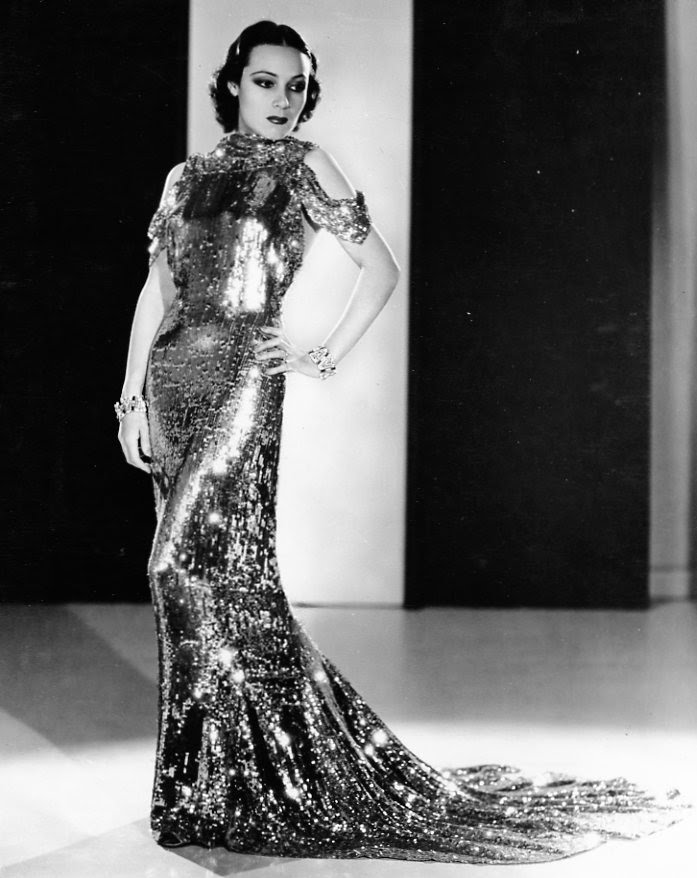
In Caliente(1935), also known as Viva Señorita, is a film written by Ralph Block, directed by Lloyd Bacon, and starred Dolores del Río.
IN CALIENTE (1935), the story takes place in the popular Mexican resort, best known for horse racing and gambling. It stars Dolores Del Rio, in a fluffy story and wonderful choreography by, Busby Berkeley. Berkeley focuses on ballroom dancing popularized by Fred Astaire and Ginger Rogers.
The story begins when Larry MacArthur, critic of New York City's smartest magazine, Manhattan Madness, who is well known for writing bad reviews. Harold Brandon, vice president, wants to break up Larry's engagement to gold digger, Clara Thorne. Knowing the upcoming marriage will be a mistake, Harold gets Larry drunk and kidnaps him by airplane to Aqua Caliente, a Mexican resort. While there, he meets Rita Gomez, who he does not know that she is a dancer, that he criticized in his magazine. Recognizing Larry as the man who had given her a bad review, Rita wants to get even with him, with the help of Jose Gomez, her uncle. The situation becomes more complicated when Clara shows up to claim her man.
This very entertaining movie showcases Dolores Del Rio, Pat O'Brien and Edward Everett Horton. Another plus.. is the location filming at Agua Caliente. Chris Pin-Martin, as one of the mariachis, has the wonderful line, "English not so very good looking."
Fun Facts:
The costumes in "The Lady in Red" number were actually blue, but looked "red" when photographed in black and white.
Soundtracks:
•"In Caliente"
(uncredited)
Music by Allie Wrubel
Lyrics by Mort Dixon
Played during the opening credits
Played as background music
Played on guitar and sung often by the mariachis
(Chris-Pin Martin, C.R. Dufau, L.R. Félix and Carlos Salazar)
•"When Irish Eyes Are Smiling"
(uncredited)
Music by Ernest Ball (1912)
Lyrics by Chauncey Olcott and George Graff (1912)
Sung a cappella by Phil Regan, Pat O'Brien and Edward Everett Horton
•"To Call You My Own"
(uncredited)
Music by Allie Wrubel
Lyrics by Mort Dixon
Sung by Phil Regan
Played as background music
Whistled and hummed by Pat O'Brien
•"The Lady in Red"
(uncredited)
Music by Allie Wrubel
Lyrics by Mort Dixon
Sung by Wini Shaw, Judy Canova and chorus
Danced by The De Marco's
Sung a cappella by Edward Everett Horton
•"Muchacha"
(uncredited)
Music by Harry Warren
Lyrics by Al Dubin
Sung by Phil Regan
Sung and Danced to by Dolores del Rio and chorus
•"She's a Latin from Manhattan"
(uncredited)
Music by Harry Warren
Used as background instrumental
•"Tango Muchacha"
(uncredited)
Music by Harry Warren
Used as background instrumental

Happy Birthday: Edward Everett Horton!

Edward Everett Horton (March 18, 1886 – September 29, 1970), was a character actor. He had a long career in film, theater, radio, television and voice work for animated cartoons. He is best known for his work in the films of, Fred Astaire and Ginger Rogers. His voice was one of his trademarks.
His first starring role was in the comedy film, Too Much Business(1922). Next, he went on to perform in the film, Beggar on Horseback(1925). Horton, performed in some of Warner Bros.' early talkies, The Hottentot and Sonny Boy.
He is best known, for his work as a character actor in the films: The Front Page (1931), Trouble in Paradise (1932), Alice in Wonderland (1933), The Gay Divorcee (1934), Flying Down to Rio (1933). Which included the popular dance team of Fred Astaire and a 23-year-old Ginger Rogers. It is the first of the series to feature Ginger and Fred as the main attraction. The film was nominated for the Academy Award for Best Picture.
He also performed in the film, Top Hat (1935), Danger Love at Work (1937), Lost Horizon (1937), Holiday (1938), Here Comes Mr. Jordan (1941), Arsenic and Old Lace (1944), Pocketful of Miracles (1961), and It's a Mad, Mad, Mad, Mad World (1963). He last performed in a non-speaking role in the film, Cold Turkey (1971).
Fun Facts:
Author F. Scott Fitzgerald lived in a cottage on Horton's estate for a time in the late 1930s.
In a scene in Friz Freleng's cartoon Hare Trigger, Yosemite Sam (in his debut) calls himself "the meanest, toughest, rip-roarin'-est, Edward Everett Horton-est hombre what ever packed a six-shooter!"

Wednesday, March 16, 2011
Janet Gaynor

Janet Gaynor (October 6, 1906 – September 14, 1984) was one of the most popular actresses of the silent film era. Gaynor became the first winner of the Academy Award for Best Actress for her performances in three films, the first: Seventh Heaven (1927). A Romance silent film and one of the first films to be nominated for the Academy Award for Best Picture. The film was written by H.H. Caldwell, Benjamin Glazer, Katherine Hilliker and Austin Strong and directed by Frank Borzage. Cast: Janet Gaynor and Charles Farrell.
First Video of 12.
Sunrise: A Song of Two Humans (1927). A silent film directed by German film director F. W. Murnau. The story was adapted by Carl Mayer from the short story Die Reise nach Tilsit by Hermann Sudermann.
Sunrise won an Academy Award for Unique and Artistic Production at the first ever Academy Awards ceremony in 1929. In 1937, Sunrise's original negative was destroyed in a fire. A new negative was created from a surviving print.
Much of the exterior shooting was done at Lake Arrowhead, California.
Please click here to view Silents movie review: Sunrise song of two Humans.
First Video of 9.
Street Angel (1928). A silent film about a young woman who finds herself on the streets before joining a traveling carnival, where she meets a vagabond painter. Directed by Frank Borzage. This was the only time which an actress has won for multiple roles.
Her career continued and she performed in the original version of, A Star Is Born (1937). A romantic/drama. Directed by William A. Wellman. Cast: Janet Gaynor Fredric March, Adolphe Menjou, May Robson, Andy Devine, Lionel Stander and Carole Landis.


Sunnyside Up (1929).

Sunnyside Up (1929). is a Fox Movietone movie musical with original songs, story, and dialogue by B. G. DeSylva, Lew Brown and Ray Henderson. The romantic comedy/musical, which starred Janet Gaynor and Charles Farrell. Directed by David Butler. Gaynor and Farrell made almost a dozen films together: Seventh Heaven (1927), Street Angel (1928), and Lucky Star (1929). Gaynor won the first Academy Award for Best Actress for the first two and F. W. Murnau's Sunrise (1927). The cinematography and special effects are impressive.
The story begins with a birds eye view of a lower East Side street, showing the people getting ready for the 4th of July celebration. While Jack Cromwell, a Long Island millionaire drives his car through the neighborhood, ends up losing control of his car to avoid hitting a child. Molly, lives above a grocery store. The young couple from different backgrounds meet at a block party. He asks her to return to Southhampton with him to make his fiancee jealous. His plan works, but in the process, they fall in love...
The color sequence contained three musical numbers of which one has become a total classic. Turn On The Heat, one of the best production numbers made that reminded me a little of Busby Berkeley musical number. A lively chorus transform the arctic cold set, complete with igloos in to a tropical setting. One of the oddest musical numbers I have ever seen.
Soundtracks:
•"(I'M A DREAMER) AREN'T WE ALL?"
Music by Ray Henderson
Lyrics by Buddy G. DeSylva and Lew Brown
Sung and played on autoharp by Janet Gaynor
•"YOU FIND THE TIME AND I'LL FIND THE PLACE"
Music by Ray Henderson
Lyrics by Buddy G. DeSylva and Lew Brown
Sung by Sharon Lynn
•"YOU'VE GOT ME PICKIN' PETALS OFF O' DAISIES"
Music by Ray Henderson
Lyrics by Buddy G. DeSylva and Lew Brown
Sung and danced by Marjorie White and Frank Richardson
•"SUNNY SIDE UP"
Music by Ray Henderson
Lyrics by Buddy G. DeSylva and Lew Brown
Sung with chorus and danced by Janet Gaynor
Reprised by Frank Richardson and Marjorie White
•"TURN ON THE HEAT"
Music by Ray Henderson
Lyrics by Buddy G. DeSylva and Lew Brown
Sung by Sharon Lynn and danced by chorus
•"IF I HAD A TALKING PICTURE OF YOU"
Music by Ray Henderson
Lyrics by Buddy G. DeSylva and Lew Brown
Sung by Charles Farrell and Janet Gaynor with child chorus
•"IT'S GREAT TO BE NECKED"
Music by Ray Henderson
Lyrics by Buddy G. DeSylva and Lew Brown
Sung by Marjorie White
Subscribe to:
Posts (Atom)